Cross-View Geo-Localization (CVGL) with OpenStreetMap (OSM) performs well in structure-rich urban environments but collapses in feature-sparse scenes such as rural roads. To study this failure mode, we introduce CV-FSS, a benchmark that pairs sequential panoramas from five rural regions with aligned OSM maps, on which single-frame methods degrade drastically. We then propose SeqLoc, an online test-time sequence aggregation mechanism that recursively maintains a log-belief volume with three key components: (1) Entropy-Tempered Uncertainty (ETU) tempers each incoming pose likelihood volume by its normalized entropy; (2) Map-Guided Relocalization (MGR) mixes a map-shaped recovery distribution into the belief so that a suppressed true pose can recover; (3) Peak-Anchored Smoothing (PAS) derives the final pose at sub-grid precision. Extensive experiments on CV-FSS and CV-RHO demonstrate that SeqLoc outperforms single-frame localization by a large margin, improving both position and orientation recall by over 50%.

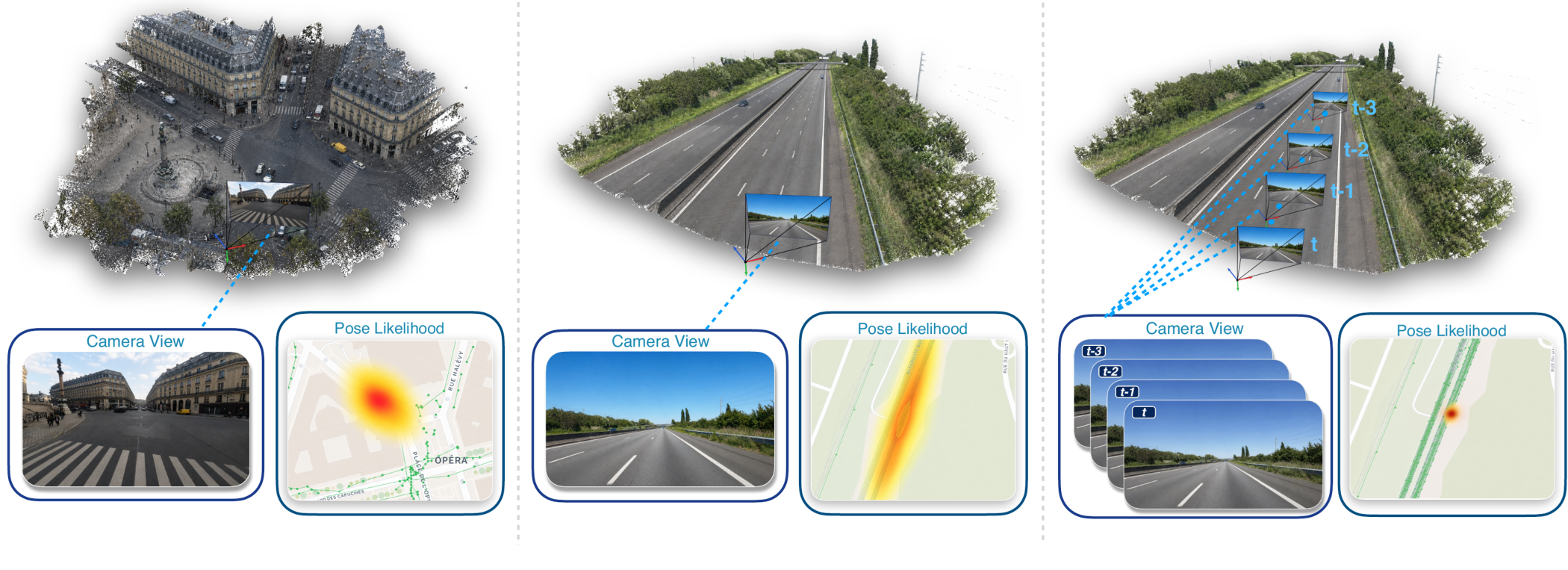
Left: a feature-rich scene gives a concentrated pose likelihood. Middle: a feature-sparse scene spreads it along the road, leaving the pose ambiguous. Right: our training-free SeqLoc aggregates the likelihoods online into a sharp, accurate pose.
CV-FSS targets OSM-based metric CVGL in feature-sparse scenes: 34.8k panoramic frames recorded as continuous routes across five regions, covering rural roads, open fields, and forest corridors where buildings and other distinctive landmarks are scarce. Every panorama is paired with a local OSM tile and split into three gravity-rectified perspective views.


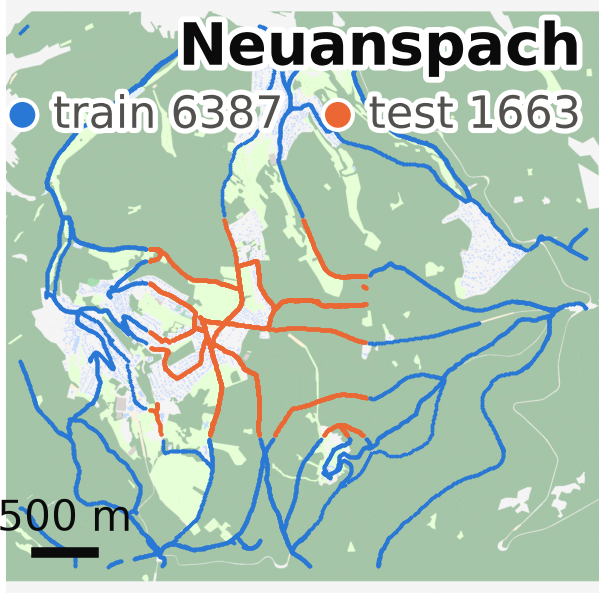
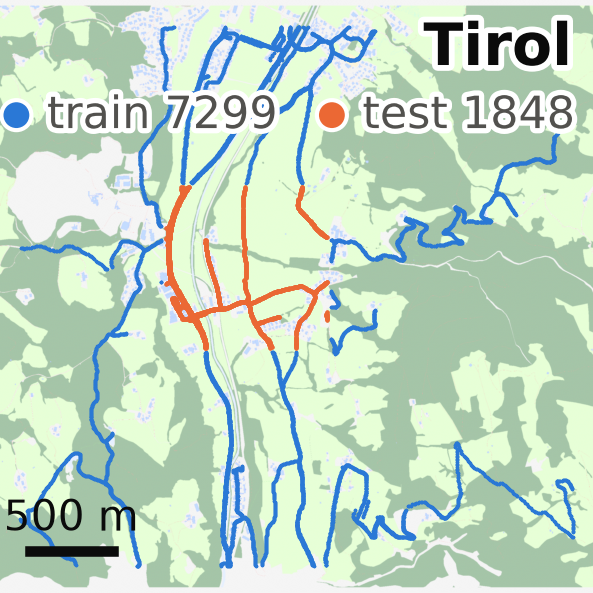
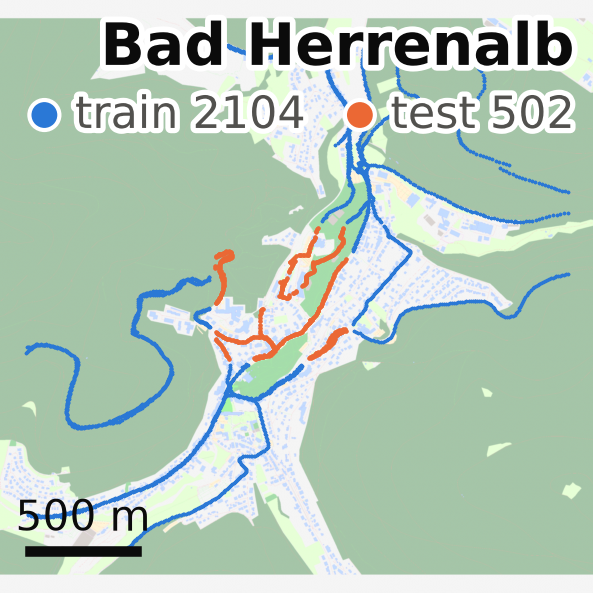
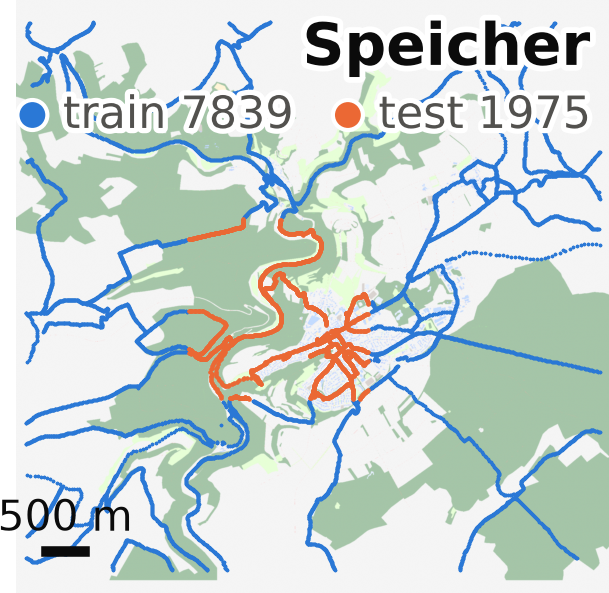
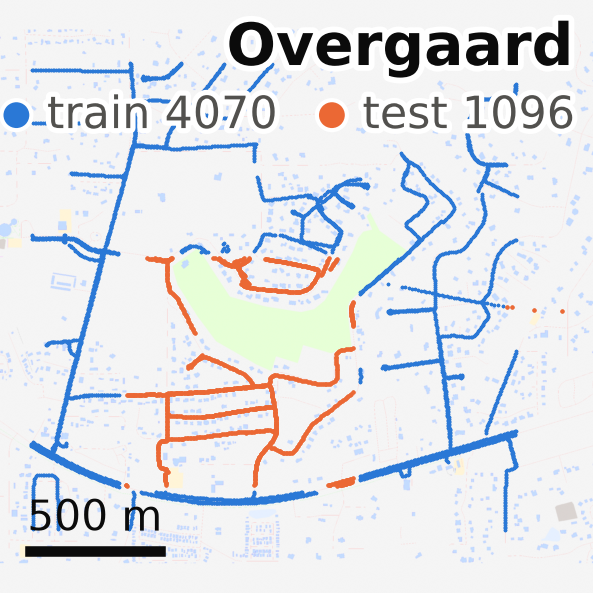
The five regions of CV-FSS — Neuanspach, Tirol, Bad Herrenalb, Speicher, Overgaard — with training routes (blue) and test routes (orange) marked on OSM.
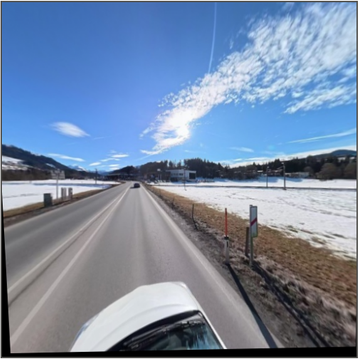
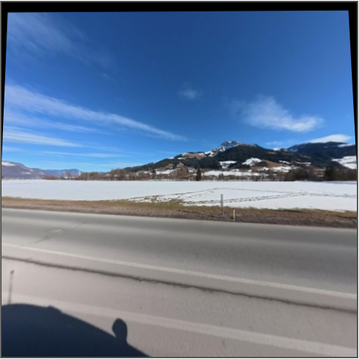
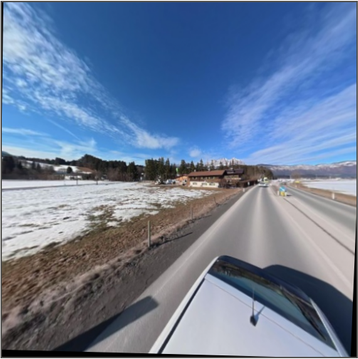
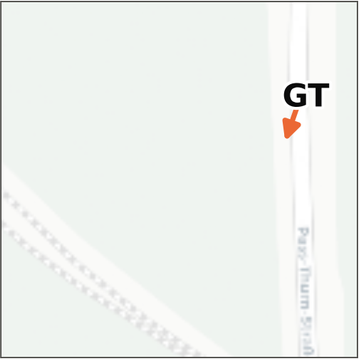
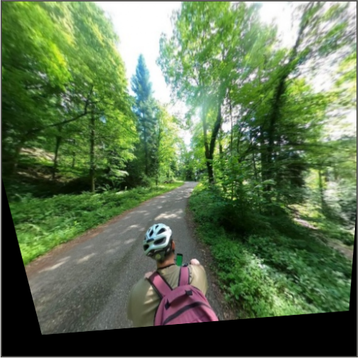
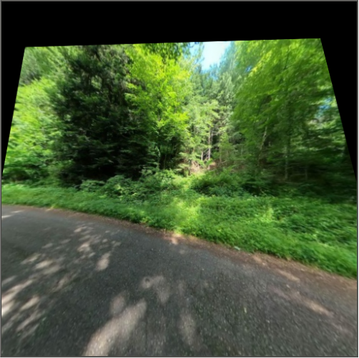
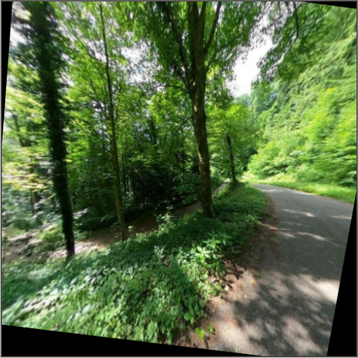
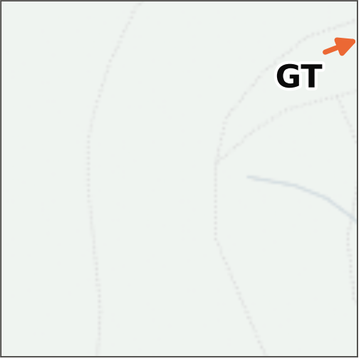
Samples from CV-FSS: three gravity-rectified perspective views split from one panorama, paired with a local OSM tile where the orange arrow marks the ground-truth pose.
SeqLoc maintains a log-belief volume over the discretized pose space and fuses each incoming pose likelihood online, localizing every frame from past frames only — no future frames, no retraining, no architectural change. All components — Entropy-Tempered Uncertainty (ETU), Map-Guided Relocalization (MGR), and Peak-Anchored Smoothing (PAS) — operate purely on probability volumes at inference time, making SeqLoc training-free and backbone-agnostic.
Offline vs. online. Offline methods sum all frames at once using future frames and localize only the reference frame. SeqLoc updates the belief recursively from one frame to the next using only past frames — localizing every frame as it arrives.
The normalized entropy of each incoming likelihood volume measures how ambiguous it is. Acting as an inverse temperature, it drives diffuse volumes toward uniform — so a spurious ridge can no longer flatten or bias the accumulated belief.
Recursive fusion is multiplicative and fragile: once wrong frames zero out the true pose, it can never revive. MGR mixes a small road-shaped recovery distribution into the belief at each step, keeping a probabilistic escape route open so a suppressed true pose recovers within a few frames.
Reading the pose as the argmax ties accuracy to the grid resolution. PAS takes a local expectation anchored inside a small window around the belief peak, refining the position to sub-grid precision while far-away mass stays unable to bias the estimate.
If you find our work useful in your research, please cite:
@article{zheng2026seqloc, title = {SeqLoc: Beyond the Single Frame for Cross-View Geo-Localization in Feature-Sparse Scenes}, author = {Zheng, Junwei and Huang, Yun and Dai, Ruize and Liu, Ruiping and Chen, Yufan and Peng, Kunyu and Yang, Kailun and Zhang, Jiaming and Wang, Guangming and Wysocki, Olaf and Stiefelhagen, Rainer}, journal = {arXiv preprint arXiv:2608.07835}, year = {2026} } @inproceedings{zheng2026rho, title = {RHO: Robust Holistic OSM-Based Metric Cross-View Geo-Localization}, author = {Zheng, Junwei and Dai, Ruize and Liu, Ruiping and Zeng, Zichao and Chen, Yufan and Wang, Fangjinhua and Peng, Kunyu and Yang, Kailun and Zhang, Jiaming and Stiefelhagen, Rainer}, booktitle = {Proceedings of the IEEE/CVF Conference on Computer Vision and Pattern Recognition (CVPR)}, year = {2026} }